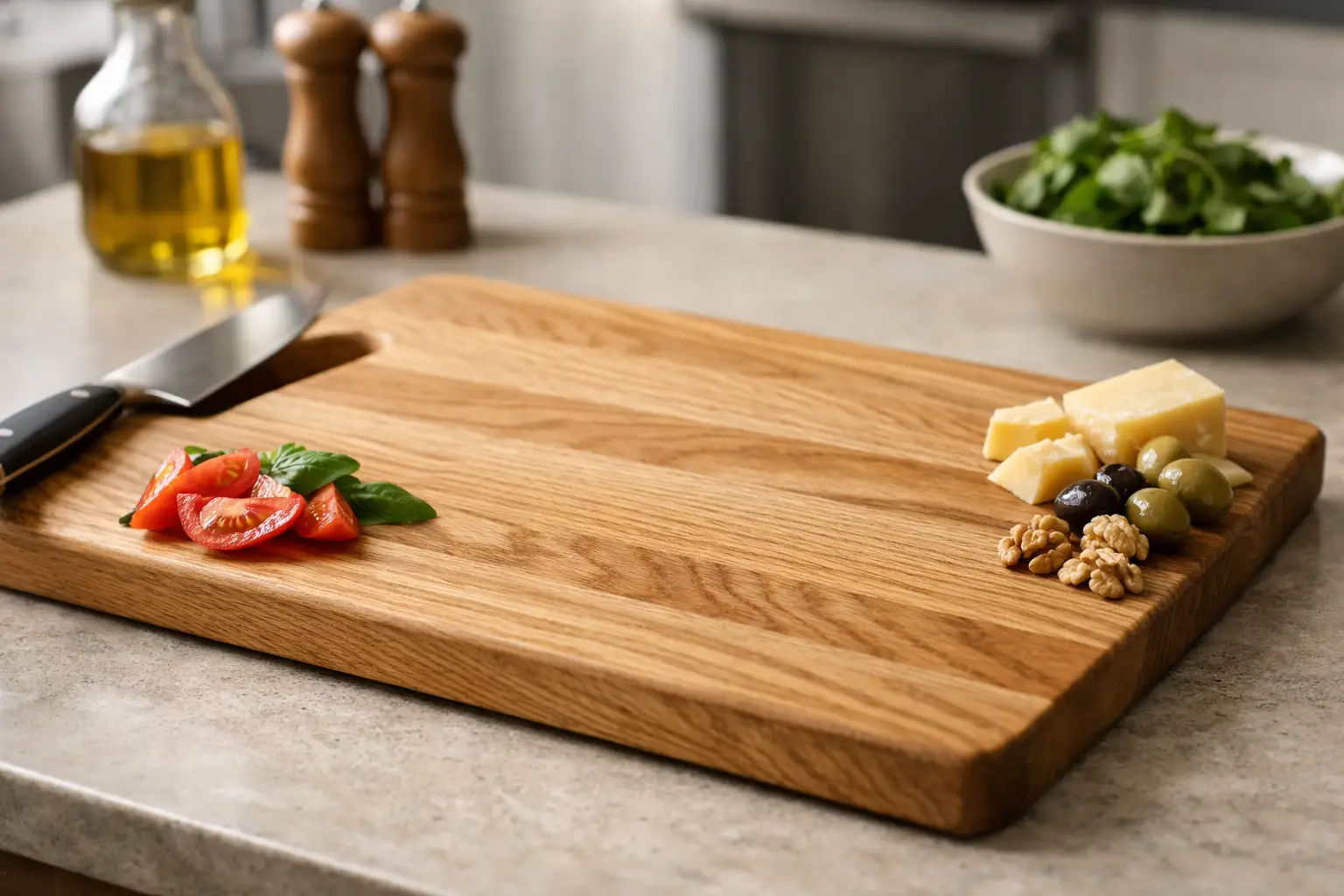
White Oak Cutting Board Benefits That Last
A cutting board earns its place by taking the daily work without asking for much in return. The best white oak cutting board benefits are felt in those ordinary moments: a stable surface beneath a chef’s knife, a warm grain under the hand, and a piece that looks more at home over time rather than worn out. For cooks and hosts who want one board to prepare dinner, serve a finished meal, and remain on the counter with confidence, white oak makes a compelling case.
It is a material with quiet presence. Lighter than walnut, more expressive than many pale woods, and naturally substantial, white oak brings a tailored look to the kitchen without becoming precious. When thoughtfully built and properly cared for, it is made for use, not for a life in the cabinet.
Why White Oak Works So Well for Cutting Boards
White oak is a domestic hardwood valued for its strength, distinctive grain, and long history in fine furniture, cabinetry, and cooperage. On a cutting board, those qualities translate into a surface that feels dependable while retaining the natural character people expect from real wood.
Its grain often carries a subtle cathedral pattern or fine linear movement, with tones that range from pale wheat to warm tan. No two boards look exactly alike. That variation matters when a cutting board is meant to do more than hold ingredients. It allows a hardworking kitchen tool to feel considered enough for a gathering, a housewarming, or a milestone gift.
The species also has a dense, durable structure. It can stand up to regular chopping, slicing, and serving when it is built to the right standard. Durability, however, does not mean invulnerability. Every hardwood board benefits from routine oiling, gentle washing, and time to dry fully between uses. Good material deserves good care.
White Oak Cutting Board Benefits in Daily Use
Strength without a harsh working surface
A cutting board should resist deep damage, but it should not be so hard that every chop feels unforgiving or quickly takes a toll on a knife edge. White oak occupies a practical middle ground. It is hard enough for busy kitchens and substantial prep, yet it remains more accommodating to knives than stone, glass, or metal surfaces.
That balance matters for the home cook who reaches for a board every day. A quality board protects both the meal and the tools used to make it. It also creates a steadier, quieter work surface than thin plastic boards that shift across the counter.
A grain with natural visual depth
White oak is recognizable without being loud. Its open-looking grain and warm, restrained color give it a character that works in traditional, transitional, and modern kitchens alike. It can complement dark cabinetry, lighten a moody stone countertop, or bring texture to a clean, minimal space.
The appearance changes gently with use and care. A fresh application of board oil deepens the tone and clarifies the grain, while the everyday marks of cooking become part of the piece rather than evidence that it has failed. That is one of the lasting pleasures of hardwood: it records use with dignity.
A board that can move from prep to presentation
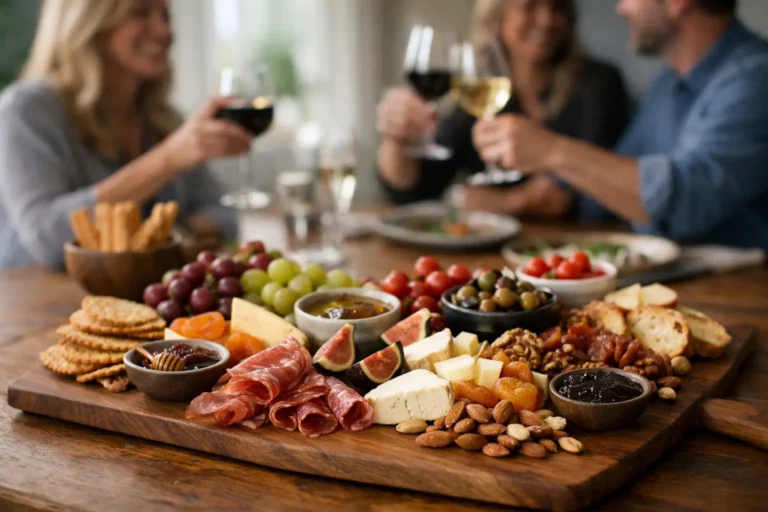
Not every cutting board is suited to the table. White oak has the visual composure to carry a loaf of bread, a spread of seasonal fruit, a roast, or a carefully arranged cheese course without requiring a separate serving piece.
This flexibility is particularly valuable for people who entertain often or prefer fewer, better things in the kitchen. One substantial board can support weekday cooking, weekend gatherings, and the quiet satisfaction of leaving something beautiful within reach.
Domestic character and meaningful provenance
For many buyers, the appeal is not only how a board looks or performs. It is also where the material comes from and how the finished piece is made. White oak is a familiar American hardwood with deep roots in the country’s craft tradition.
A board made from domestic white oak carries that sense of place into the home. When it is precision-milled, hand-assembled, finished by hand, and individually inspected, the material becomes more than a species name. It becomes evidence of considered workmanship.
End-Grain Construction Brings Out the Best in White Oak
Wood species is only part of the story. Construction determines much of how a cutting board performs over years of use. For a premium white oak board, end-grain construction is especially worth understanding.
On an end-grain board, the cut ends of wood fibers face upward to form the working surface. Rather than forcing a knife across long fibers, the blade can pass between them. This creates the familiar, slightly yielding feel prized by serious cooks. With proper maintenance, the fibers can close around shallow knife marks more gracefully than a flat-grain surface.
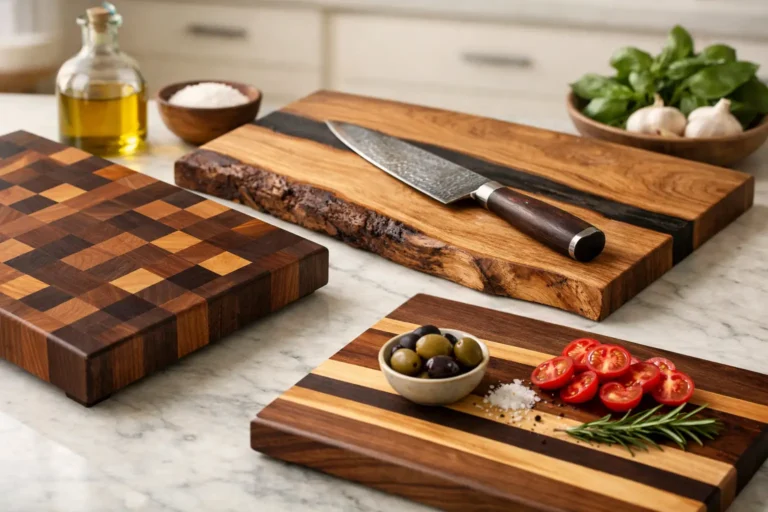
End-grain construction also gives a board visual dimension. The pattern is built from individual blocks of carefully selected hardwood, assembled into a surface that has depth from every angle. It requires more material, more milling, and more hands-on work than a simple thin board, but the result feels appropriately substantial.
That said, an end-grain board is an investment in both craftsmanship and care. It should never be soaked, placed in a dishwasher, or left standing in pooled water. Wood responds to moisture, and even a well-made board needs the owner’s attention to remain stable and beautiful. Use it generously. Care for it consistently.
White Oak Compared With Other Popular Board Woods
White oak is not the only excellent choice, and the right species depends partly on the kitchen and the person using it. Black walnut offers deeper chocolate tones and dramatic contrast. It is often chosen when the board is meant to feel especially rich or formal. Hard maple is lighter, cleaner in appearance, and exceptionally familiar in professional-style work surfaces.
White oak sits comfortably between them. It has more visible grain movement than maple and a brighter, more relaxed presence than walnut. It is a strong choice for someone who wants a board with warmth and texture but prefers a lighter palette.
One detail deserves clarity: white oak and red oak are not interchangeable for cutting-board purposes. White oak’s cellular structure includes tyloses, natural formations that help make its pores less permeable than red oak’s. This is one reason white oak has historically been valued for applications where moisture resistance matters. That does not make it waterproof, nor does it eliminate the need for proper finishing and maintenance. It does help explain why carefully selected white oak is the better oak for a kitchen board.
What to Look for in a White Oak Board
The species should be paired with sound construction. Look for a board with meaningful thickness, carefully joined wood, smooth edges, and a finish made for food contact. A food-safe blend of oil and beeswax helps nourish the wood while giving the surface a soft, touchable finish.
Details also reveal whether a board is designed for the long term. Consider how it sits on the counter, whether its proportions suit the way you cook, and whether the maker has taken the time to select boards for grain and color rather than treating wood as a uniform commodity. On a personalized or gift-ready piece, those choices carry even more weight.
At Bluwood Products, white oak is selected and crafted in Arkansas as part of a broader commitment to domestic hardwood, end-grain construction, and boards made to become part of a home’s rhythm. The goal is not a board that remains untouched. It is one that earns its patina through years of meals, celebrations, and ordinary Tuesday nights.
Caring for White Oak So It Ages Well
A white oak cutting board needs a simple routine. Wash it by hand with mild soap and warm water, then dry it promptly with a towel and allow both sides to air dry. Never submerge it, put it in the dishwasher, or use it as a trivet for a hot pan.
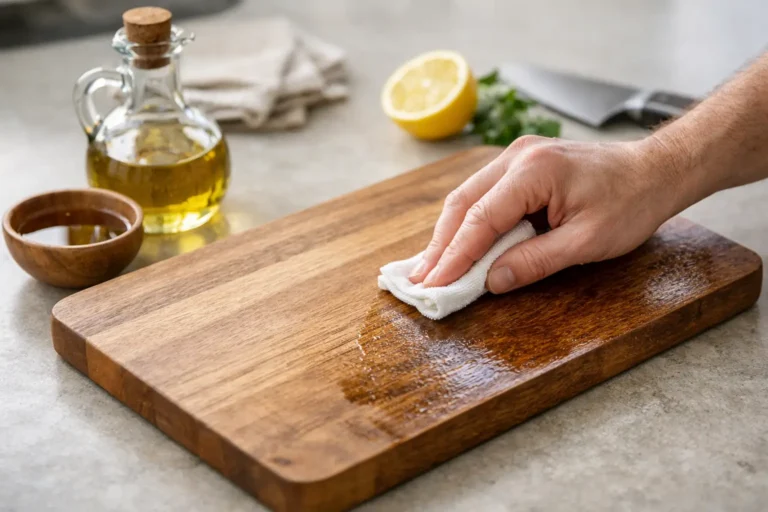
Reapply food-safe board oil when the surface begins to look dry or dull. In a frequently used kitchen, that may be every few weeks; in a lighter-use setting, it may be less often. A beeswax conditioner can add another layer of moisture resistance and leave the surface feeling smooth.
If the board picks up an odor after cutting garlic, onions, or fish, a gentle scrub with coarse salt and lemon can help, followed by a thorough wipe-down and re-oiling when dry. Small marks are normal. They are the mark of a board doing its job.
A white oak cutting board is not meant to stay perfect. It is meant to become personal: quieter in its edges, richer in its color, and more familiar with every meal made on its surface.