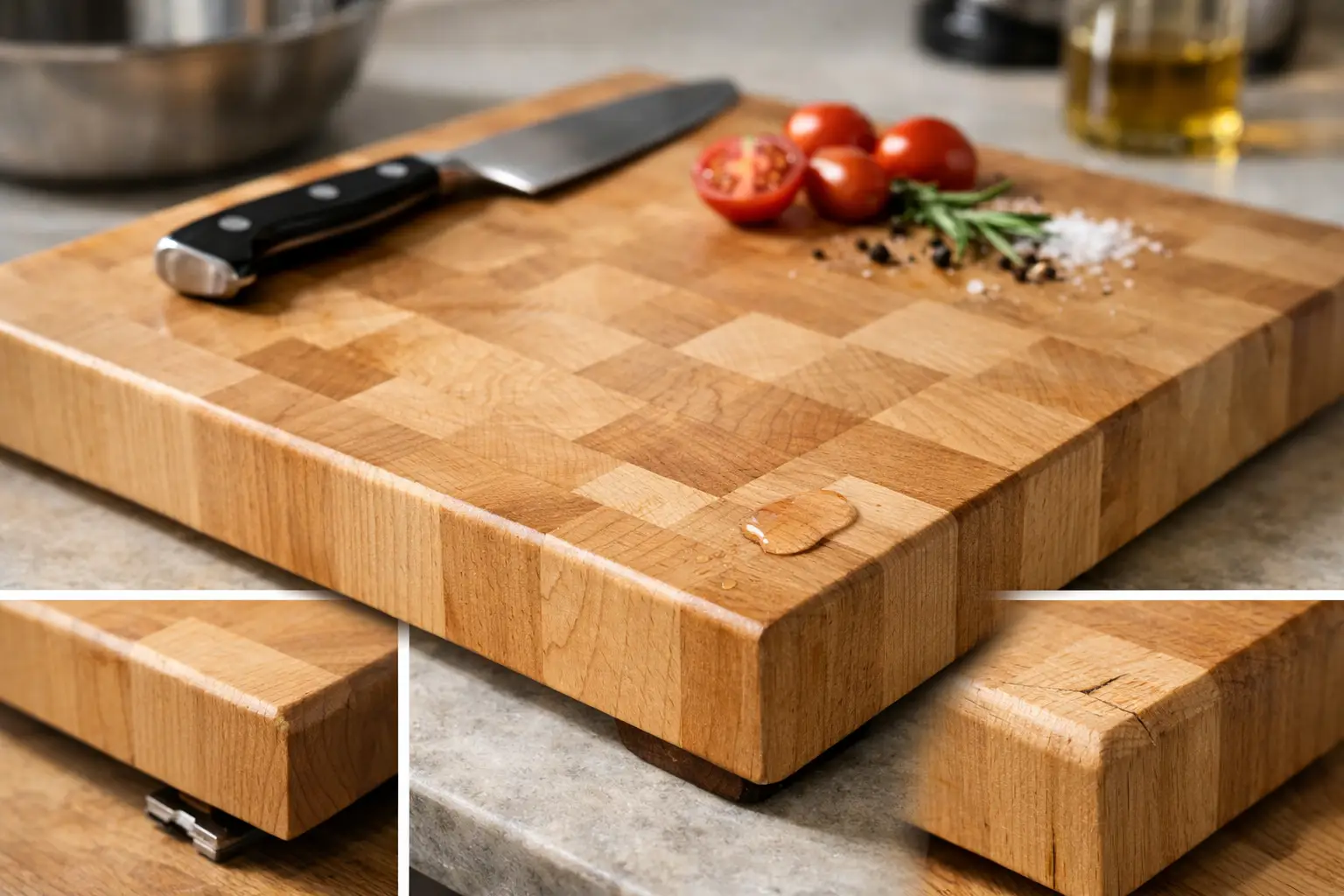
Hard Maple Cutting Board Durability Explained
A cutting board earns its place slowly: through hurried weeknight prep, holiday carving, bread sliced for friends, and the small marks that record a kitchen well used. Hard maple cutting board durability is why this pale, quietly handsome hardwood has remained a standard in serious kitchens for generations. It has the density to stand up to daily knife work, a close grain that resists taking on moisture, and enough natural give to treat a good knife with respect.
For a board meant to stay on the counter, come to the table, and serve for years, hard maple is not simply a practical choice. It is a material with staying power.
What Makes Hard Maple So Durable?
Hard maple, sometimes called sugar maple or rock maple, is a domestic hardwood known for its dense, fine, even grain. That tight grain structure is central to its performance. It gives the wood a smooth surface, helps limit deep moisture absorption, and allows the board to wear gradually rather than break down quickly under repeated use.
Hard maple is harder than many common cutting-board woods, but it is not chosen solely for hardness. A board can be too hard for comfortable knife use, or too soft to hold its surface. Maple sits in a useful middle ground. It resists dents and gouges better than softer woods while remaining more forgiving on knife edges than glass, stone, ceramic, or metal surfaces.
Its light natural color also has a practical appeal. The clean, warm tone makes food easy to see during prep and develops a richer, more lived-in character over time. A well-made maple board does not need to remain pristine to remain beautiful. Its surface should reflect use, not surrender to it.
Density Is Only One Part of the Story
Hard maple is often discussed in terms of its Janka hardness rating, a standardized measure of a wood’s resistance to denting. That figure is useful, but it does not tell the whole story of a cutting board. Grain orientation, lumber selection, joinery, thickness, finishing, and care all influence how a board performs over decades.
A thin, poorly dried maple board can still warp. A board made with weak glue joints can still fail. Conversely, carefully selected hard maple, properly conditioned and built with purpose, can take on daily work with remarkable grace. Material matters. Construction determines how fully that material delivers on its promise.
Why End-Grain Construction Changes the Equation
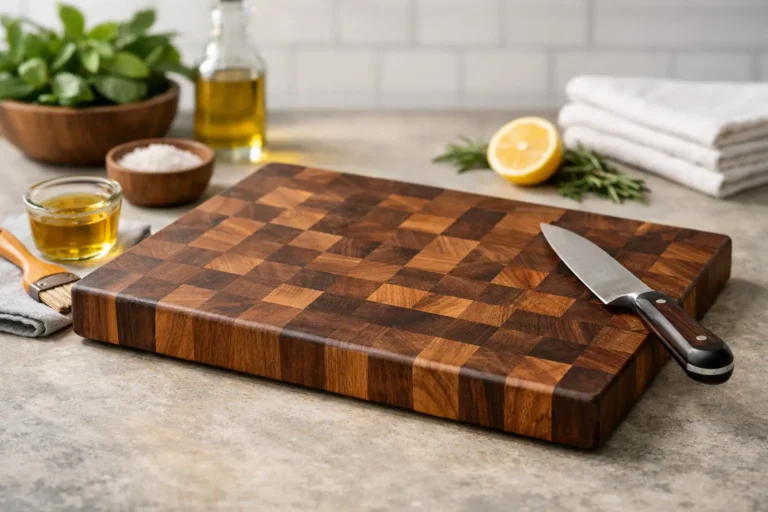
End-grain construction makes especially good use of hard maple’s natural durability. Rather than presenting long fibers across the board’s surface, an end-grain board exposes the ends of those fibers. Under a knife, those fibers part slightly and close again, instead of being repeatedly severed across their length.
This gives an end-grain board its distinctive, gently yielding cutting feel. The blade can enter the surface with less abrasion than it encounters on harder, unyielding materials. Over time, this can help preserve both the board and the knife.
End grain also creates a substantial visual pattern. Individual wood blocks show their character in a composed surface, with small shifts in tone and grain that cannot be replicated by a printed or manufactured material. For a large board used as a carving station, serving piece, or permanent countertop companion, that depth has real presence.
The trade-off is that end-grain boards require honest care. They should be hand-washed, dried promptly, and conditioned regularly. They are not dishwasher pieces, and they should never be left soaking in a sink. That is not a weakness unique to maple. It is the necessary relationship between real wood and a working kitchen.
How Hard Maple Handles Everyday Kitchen Use
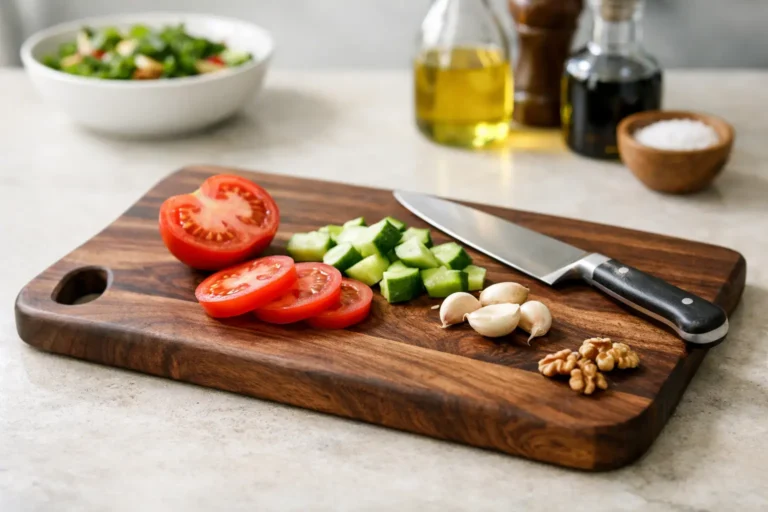
A hard maple board is well suited to vegetables, herbs, boneless meats, fruit, cheese, and bread. With normal knife technique, it handles the rhythm of daily cooking without quickly becoming ragged or deeply scarred. Fine surface marks will appear. They are a natural part of a wood board’s life, and on a quality end-grain surface, many are less noticeable than expected.
Moisture is the more consequential challenge. Wood moves as its moisture level changes, expanding and contracting with the surrounding environment. A board that is repeatedly saturated on one side, left beside a heat source, or put through a dishwasher can cup, split, or open at the joints. Even excellent hardwood cannot overcome abuse by heat and water.
Acidic foods deserve a little attention as well. Lemons, tomatoes, vinegar, and berries will not ruin a maple board when used normally, but prolonged exposure can dry the surface or leave temporary color variation. Wipe the board clean after prep, wash it with mild soap and warm water, and dry it upright or on edge so air can reach both sides.
For raw proteins, the question is not whether wood is suitable, but whether the board is cleaned correctly. Wash promptly after use, scrub the surface as needed, rinse, and dry thoroughly. Designating one side of a reversible board for raw-protein prep can provide additional peace of mind while preserving the other side for produce, bread, and presentation.
Hard Maple Cutting Board Durability Depends on Care
The best care routine is simple enough to follow. After each use, wash the board by hand with warm water, mild dish soap, and a soft sponge or brush. Dry it immediately with a towel. Do not submerge it, and do not put it in a dishwasher, where prolonged water exposure and high heat can do lasting damage in a single cycle.
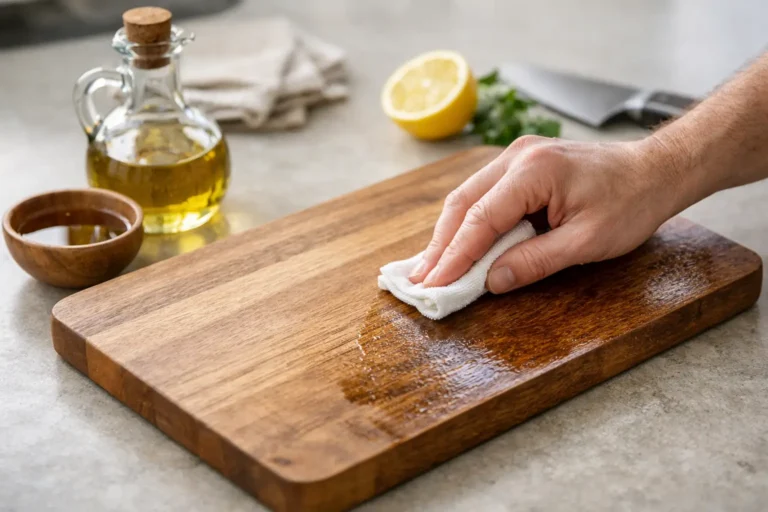
Conditioning matters because wood needs replenishment. Food-safe mineral oil soaks into the surface and helps slow moisture exchange. A finishing blend that includes beeswax adds a soft protective layer and a refined feel under the hand. When the surface begins to look dry, pale, or thirsty, it is time to reapply.
How often depends on climate, frequency of use, and where the board lives. A board used every day in a dry, climate-controlled kitchen may benefit from oil every few weeks. A lightly used board may need attention only every month or two. The wood will tell you. When water no longer beads lightly on the surface and instead absorbs quickly, condition it.
Avoid storing a maple board flat against a damp countertop or directly beside a stove. If it is large enough to remain on display, that can be a practical advantage: upright storage or countertop placement encourages airflow and keeps a useful object within reach.
Can a Worn Maple Board Be Restored?
Usually, yes. One of hardwood’s enduring advantages is that it can be renewed rather than discarded. Light knife marks often soften naturally with oil and regular use. For deeper scratches, raised grain, or stubborn discoloration, a careful sanding followed by oil and beeswax can restore the surface.
This repairability changes the value of the board. A plastic board often reaches a point where its deeply scarred surface feels difficult to maintain and easy to replace. A substantial maple board can be refreshed, returned to service, and made personal again. Its age becomes part of its character.
When Maple May Not Be the Right Choice
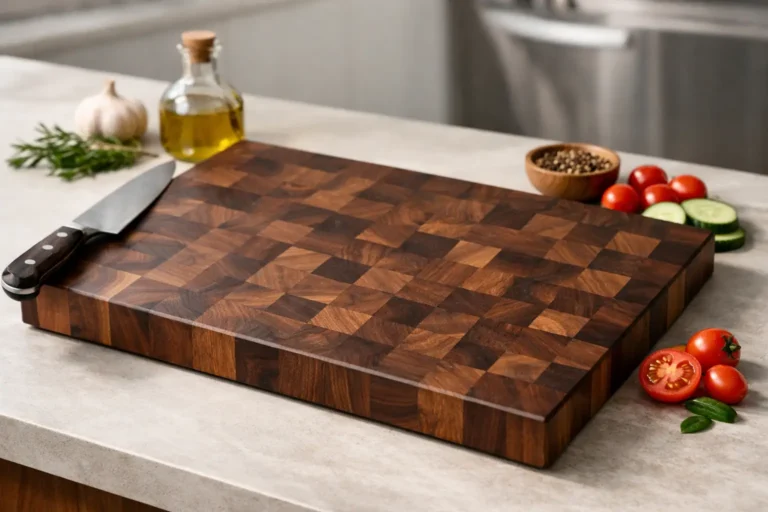
Hard maple is a strong all-around choice, but no single wood suits every preference. Those who want a notably darker, more dramatic board may prefer black walnut. Those drawn to a more pronounced grain pattern may favor white oak, provided it is selected and finished for kitchen use. Maple’s appeal is its restraint: clean color, even texture, and proven utility.
It is also worth considering size and weight. A thick end-grain maple board feels reassuringly solid, especially when handling a roast or preparing a full meal. For some cooks, however, a large board may be too heavy to move to the sink comfortably. A smaller daily board and a larger presentation or carving board can be a better pairing than asking one piece to do every job.
At Bluwood Products, hard maple is selected not just for its familiar beauty, but for the way it performs when paired with substantial end-grain construction, precise milling, hand assembly, and a food-safe oil-and-beeswax finish. The goal is not to create something too precious to touch. It is to make a board worthy of becoming part of the household.
A hard maple cutting board asks for a few minutes of care because it is built to give back years of use. Let it carry the marks of good meals. Keep it clean, keep it conditioned, and let the wood become more distinctly yours with every season.