How Often Should You Oil a Wood Cutting Board?
A fine hardwood cutting board should never feel like an object you are afraid to use. It is made for the rhythm of a real kitchen: a weeknight supper, a loaf sliced warm at the table, a holiday roast shared with family. But if you have wondered how often to oil a wood cutting board, the answer is less about the calendar than the condition of the wood.
Oil when the board looks dry, feels slightly rough, or begins absorbing water quickly. For many well-used boards, that means about once a month. For a board used lightly, every two to three months may be enough. The goal is simple: replenish the moisture barrier that helps hardwood resist water, stains, and the daily demands of food preparation.
How Often to Oil a Wood Cutting Board
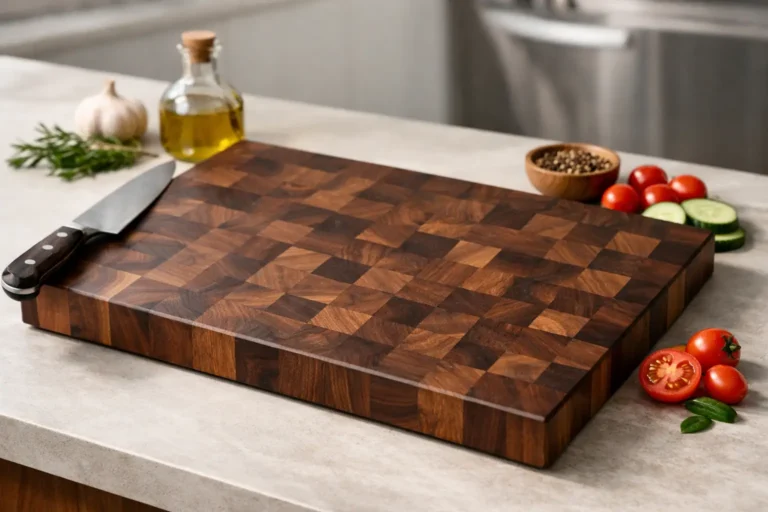
A monthly oiling is a dependable starting point for an end-grain board used several times a week. End grain is valued because the wood fibers stand upright, creating a hardworking surface that is gentle on knives and visually rich. Those exposed fibers also benefit from regular conditioning.
Still, no single schedule suits every kitchen. A board used daily for chopping vegetables, preparing proteins, and serving will need attention more often than one reserved for weekend baking or display. Dry indoor air during winter can also pull moisture from wood faster, while a humid summer kitchen may extend the time between treatments.
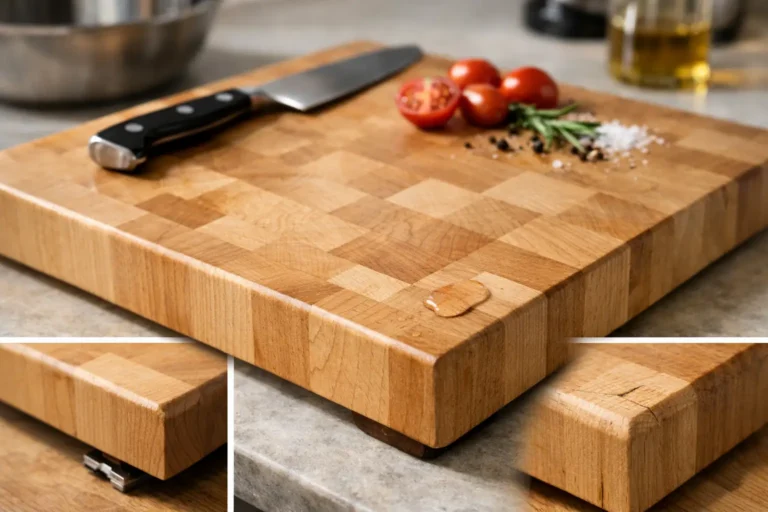
Let the board tell you what it needs. When water beads on the surface for a moment before soaking in, the finish is doing its work. When droplets disappear almost immediately, it is time to oil. A pale, chalky appearance, a dry feel, or a surface that seems less lively than usual are equally reliable signals.
Freshly made or newly received boards may also appreciate an early check-in. Premium boards are finished before they leave the maker, but every home has its own climate and routine. After the first few weeks of use, assess the surface rather than following a rigid date on the calendar.
Why Oil Matters Beyond Appearance
Oil is not merely a cosmetic treatment. It settles into the wood and helps slow the movement of moisture in and out of the board. That matters because repeated soaking and drying can cause hardwood to swell, shrink, or eventually develop cracks.
A well-conditioned board is easier to clean and more enjoyable to use. Its grain gains depth, especially in woods such as black walnut, white oak, and hard maple. The color becomes richer without looking artificial, and the natural figure remains visible rather than hidden beneath a heavy coating.
For an end-grain cutting board, regular care also honors the construction itself. Carefully joined blocks of hardwood are designed to work together through years of chopping and serving. Keeping the surface conditioned supports that long-term performance. It is a small ritual that protects an object made to become part of a home’s history.
The Signs Your Board Needs Oil Now
Your board does not need to wait for a monthly reminder if it is clearly thirsty. Look for changes after washing or before beginning food prep. The most common sign is water that no longer beads on the surface. Instead, it darkens the wood immediately and seems to vanish into it.
You may also notice dry-looking patches, particularly around the center of the board where most chopping happens. These areas can appear lighter or less saturated than the surrounding wood. A board that feels slightly coarse after it has dried may need conditioning as well, although a raised grain caused by water may occasionally call for very light sanding before oiling.
Do not confuse normal character with neglect. Hardwood develops variation over time, and a well-used board can carry faint knife marks that speak to a life in the kitchen. Oil will enrich the surface, but it will not erase every sign of use. That is part of the appeal. A cared-for board should look lived with, not untouched.
How to Oil a Wood Cutting Board Properly
Choose a food-safe, non-drying board oil, most commonly food-grade mineral oil. It is stable, odorless, and does not turn rancid. Avoid cooking oils such as olive, vegetable, coconut, or avocado oil. They may seem convenient, but they can oxidize over time and leave an unpleasant smell or sticky surface.
Begin with a clean, fully dry board. Wash it by hand with mild soap and warm water, rinse promptly, and dry it upright or on edge so air can circulate around both sides. Never soak a wood board, and never place it in the dishwasher. Heat, prolonged water exposure, and detergent are a difficult combination for natural hardwood.
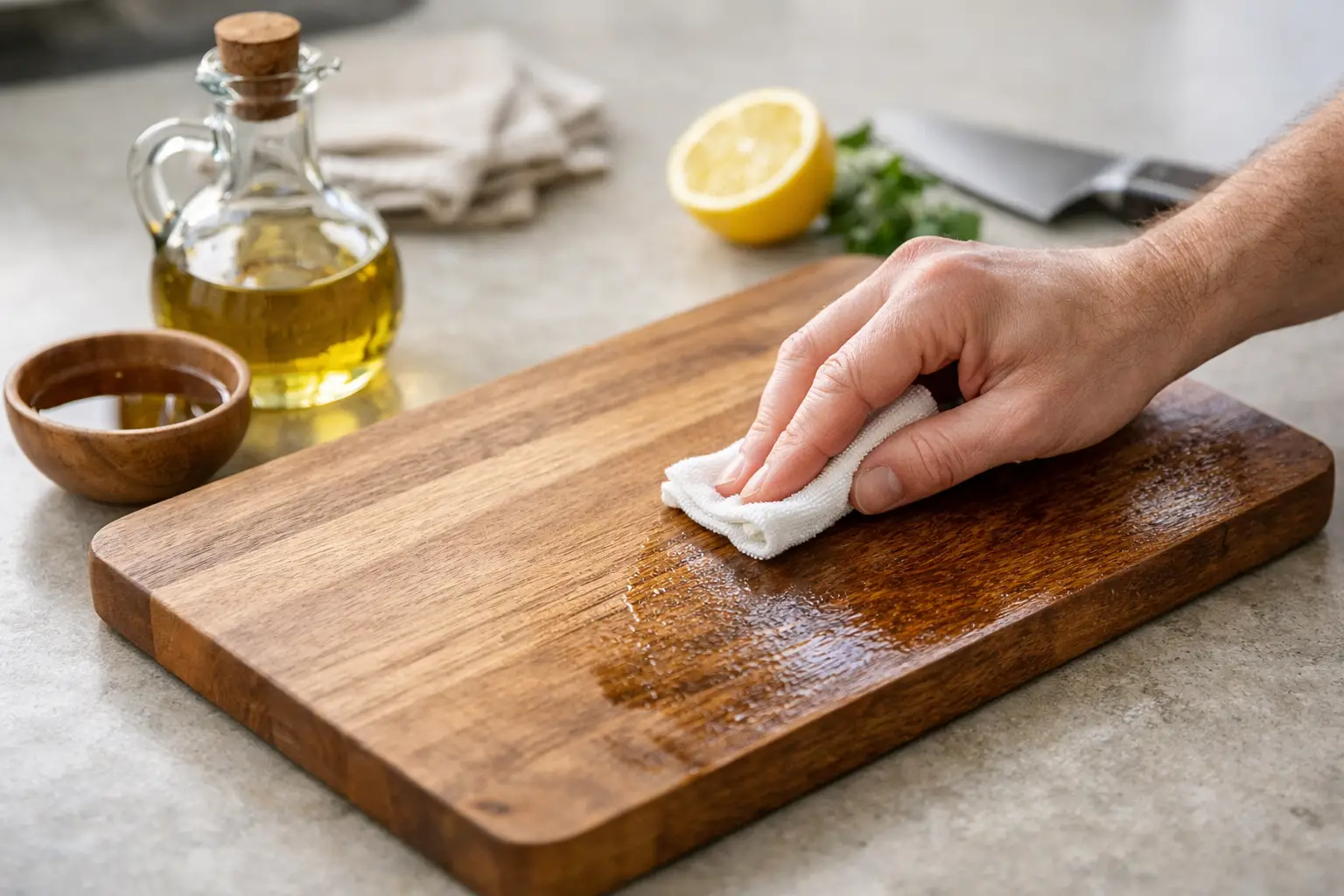
Once dry, pour a small amount of mineral oil directly onto the board or onto a clean, lint-free cloth. Rub it across the entire surface with the grain, including the edges, handholds, and underside. The underside matters. Conditioning only one face can encourage uneven moisture movement over time.
Let the oil rest for several hours or overnight. A thirsty board may absorb more than you expect, especially after a period of heavy use or dry weather. Wipe away any excess with a clean cloth before returning the board to service. The surface should feel smooth and nourished, never greasy.
For most boards, a thorough oiling takes only a few minutes of active work. The waiting time is what allows the wood to take in what it needs.
Oil First, Then Consider Beeswax
A board cream or conditioner made with mineral oil and beeswax can be a useful second step after oiling. Oil penetrates the wood; beeswax adds a soft protective layer at the surface. It can help water bead more readily and gives the board a mellow, hand-finished feel.
This is especially helpful for presentation boards and pieces that move between food preparation and serving. A food-safe oil-and-beeswax finish, like the one used on Bluwood boards, brings warmth to the grain while supporting everyday use.
Wax is not a substitute for oil. If the wood looks dry, begin with mineral oil and allow it to absorb fully. Apply conditioner afterward in a thin layer, let it sit briefly, then buff away the excess. Used occasionally between oilings, it can keep the board feeling especially polished.
What Changes the Oiling Schedule
Kitchen habits matter more than a fixed rule. A board used mostly for bread, fruit, and dry ingredients may need oil less often than one regularly exposed to juicy tomatoes, citrus, or repeated washing. Likewise, a large entertaining board that spends more time on display may only need seasonal conditioning, provided it is stored away from direct heat and sunlight.
Your home environment matters, too. Forced-air heat, a wood stove, or arid regional conditions can dry a board quickly. In those settings, inspect the surface every few weeks. In a more humid home, oiling too frequently is usually not harmful, but it can leave unnecessary residue if the wood is already well conditioned.
A useful approach is to oil after several washes rather than after a certain number of meals. For a heavily used board, that often works out to monthly. For occasional use, inspect it at the beginning of each season. This keeps care responsive instead of automatic.
A Few Habits That Protect the Board Between Oilings
Regular oiling works best alongside sensible daily care. Wash the board soon after use rather than leaving food residue or moisture on the surface. Dry it thoroughly, and store it on its edge when possible. Air moving around both sides reduces the chance of uneven drying.
For strong odors from garlic, onions, or fish, coarse salt and half a lemon can freshen the surface after cleaning. Use a gentle touch, rinse promptly, and dry completely. For deeper stains or lingering concerns after raw protein, clean with warm soapy water and avoid aggressive soaking.
Keep the board away from the dishwasher, microwave, and long periods of direct sun. Do not leave it resting in a puddle near the sink. These precautions are simple, but they are the difference between a board that merely lasts and one that gains character gracefully.
A hardwood board is meant to earn its marks at the table and in the kitchen. Watch the surface, respond when it looks dry, and give it the occasional quiet care it deserves. Use it. Care for it. Make it yours.