Black Walnut vs. Maple vs. White Oak Cutting Boards
The wood species you choose determines much of a cutting board’s color, grain, and personality. American black walnut, hard maple, and white oak each create a durable kitchen surface, but they offer distinctly different looks. The best choice depends on your kitchen, your preferences, and whether the board will be used primarily for preparation, serving, gifting, or display.
American black walnut: rich and sophisticated
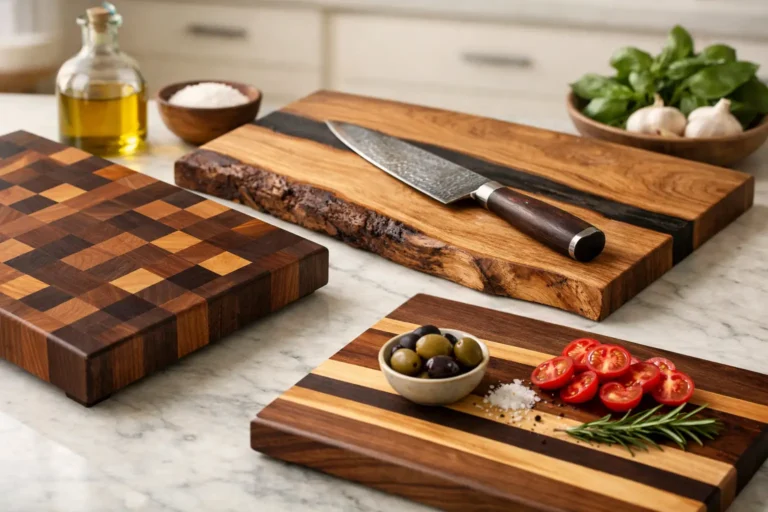
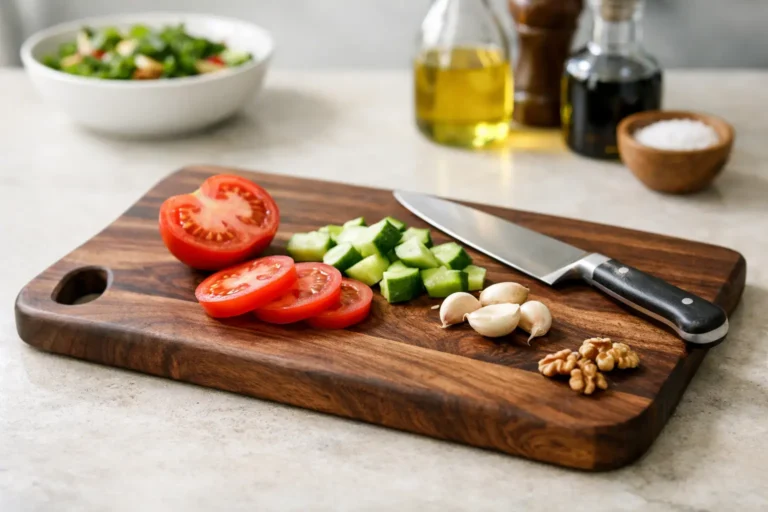
Black walnut is known for chocolate-brown heartwood, occasional lighter streaks, and graceful grain variation. It pairs naturally with modern kitchens, warm traditional interiors, and luxury gift presentations. Because every tree is different, walnut boards can range from deep brown to lighter caramel tones.
Walnut has a refined feel and is a popular choice for end-grain boards, serving boards, personalized wedding gifts, and realtor closing gifts. Its darker surface also makes the warm color of breads, cheeses, and fresh produce stand out.
Hard maple: bright and timeless
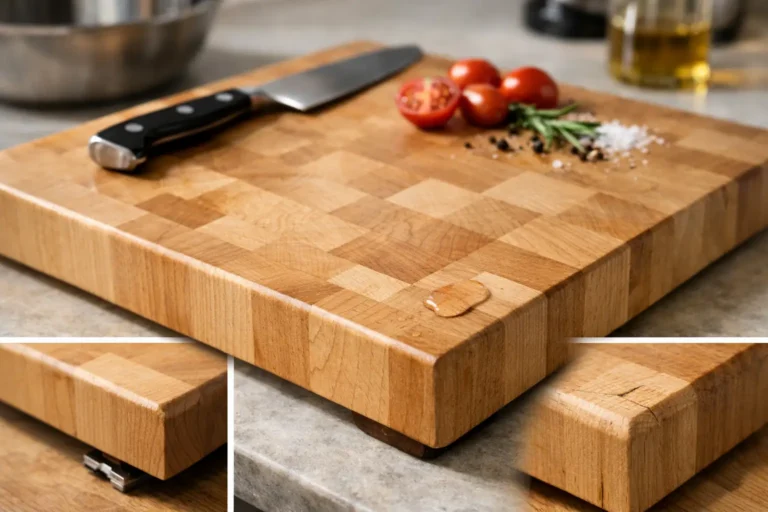
Hard maple offers a pale, clean appearance with subtle grain. It has a long history in butcher blocks and commercial kitchen work surfaces. The lighter color suits bright kitchens and creates strong contrast when combined with walnut in patterned boards.
Maple is an excellent fit for cooks who like a traditional culinary look or want a neutral board that works with nearly any décor. Like all natural wood, its exact tone and figuring will vary.
White oak: warm grain and visible character
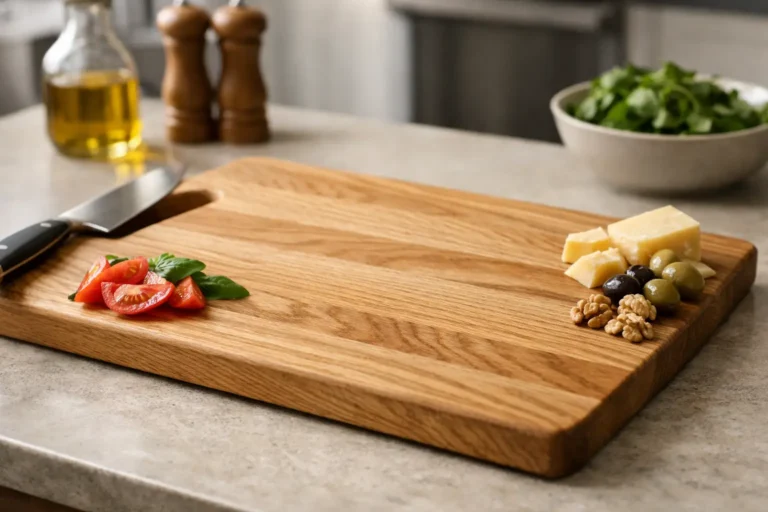
White oak is admired for warm golden-to-tan color and prominent grain. Its visual texture gives a board a rustic yet polished character, making it a strong match for farmhouse, craftsman, and contemporary interiors.
Oak’s recognizable grain can make a particularly memorable serving board or personalized gift. Proper construction, finishing, washing, and conditioning are essential for any solid-wood kitchen board.
How the three woods compare
- Color: Walnut is the darkest, maple the lightest, and white oak falls between them with warm golden tones.
- Grain: Maple is understated, walnut is flowing and varied, and white oak is more pronounced.
- Style: Walnut feels luxurious, maple feels classic, and white oak feels warm and architectural.
- Pairing: Walnut and maple create bold contrast; oak works beautifully alone or in subtle combinations.
Construction matters as much as species
An end-grain board presents the ends of the fibers upward, creating a substantial patterned surface with a forgiving knife feel. An edge-grain board displays long grain lines and usually has a slimmer, lighter profile. Learn more in our end-grain versus edge-grain guide.
Which wood is best for your cutting board?
Choose black walnut for deep color and upscale presence. Choose hard maple for a bright, traditional work surface. Choose white oak for warm tone and expressive grain. If you are selecting a gift, consider the recipient’s kitchen colors and whether engraving or personalization should stand out subtly or with strong contrast.
Every Bluwood board is handcrafted in Arkansas with the natural grain as part of the design. Review our cutting board guide, explore personalized gifts, or shop premium handcrafted cutting boards.