How to Care for an End Grain Cutting Board
A fine end-grain board should not spend its life leaning untouched against a backsplash. It was made for the rhythm of a real kitchen: tomatoes on a summer afternoon, herbs for a family dinner, a warm loaf sliced and shared. Knowing how to care for an end grain cutting board lets you use it with confidence while preserving the warmth, depth, and character that made you choose hardwood in the first place.
End grain construction is exceptionally kind to knives and built for long service, but wood responds to water, dry air, heat, and neglect. The good news is that care is straightforward. A few deliberate habits will help your board age beautifully.
Why End Grain Boards Need Different Care
An end-grain cutting board is made with the wood fibers facing upward, like the ends of a bundle of tightly arranged straws. When a knife meets the surface, those fibers can part slightly and close again. That is why a well-made end-grain board is gentler on a sharp edge and develops its patina differently from a thin, flat-grain board.
Those same exposed fibers can take on moisture if the board is left wet or submerged. Wood naturally expands and contracts as its moisture level changes. Too much water, too much heat, or an overly dry environment can create stress that leads to warping, checking, or separation over time.
A quality board is made to work hard. It simply needs to be washed promptly, dried completely, and replenished with oil when the surface looks thirsty.
How to Care for an End Grain Cutting Board Every Day
After preparing food, wash the board by hand with warm water, a mild dish soap, and a soft sponge or dishcloth. Clean both sides, even if you used only one. This keeps moisture exposure balanced and helps prevent the board from pulling or cupping toward one side.
Rinse away the soap, then dry the surface with a clean towel. Stand the board on its edge or place it in a rack where air can reach both faces. Do not set it flat on a damp counter or slide it immediately into a closed cabinet. A little airflow is one of the simplest forms of care.
For everyday use, this is enough. You do not need specialty cleaners or an elaborate routine after every meal. Consistency matters more than complication.
Never soak or machine-wash wood
A wooden cutting board should never go into the dishwasher, where extended water exposure, detergent, and high heat can damage even a substantial piece of hardwood. Do not soak it in a sink, either. A quick hand wash is right. Leaving it underwater while dishes pile up is not.
Keep the board away from direct stovetop heat, a hot oven, or a sunny windowsill. Sudden or uneven temperature changes can dry wood too quickly. If you use the board for serving, do not place hot pans directly on it unless it was specifically designed as a trivet.
Handle raw proteins with good kitchen habits
Wood is a practical, durable cutting surface, but safe food handling still comes first. Wash the board thoroughly with warm, soapy water after cutting raw meat, poultry, or seafood. Rinse and allow it to dry fully before the next use.
Many cooks prefer to keep one board for raw proteins and another for produce, bread, and ready-to-eat foods. It is not required for every kitchen, but it is a useful habit when preparing a large meal or cooking for a crowd. If deeper sanitizing is needed, use a food-safe product suited to wood and follow its directions carefully. Harsh chemicals and prolonged exposure can strip the board’s finish and dry the wood.
Oil the Board Before It Looks Worn Out
Food-safe mineral oil is the foundation of wooden board care. It penetrates the fibers, helps slow moisture absorption, and enriches the natural color of species such as black walnut, white oak, and hard maple. A conditioner made with mineral oil and beeswax adds a protective finish at the surface, leaving the board smooth and pleasantly finished to the touch.
How often you oil depends on your home and how you use the board. A board used daily in a dry, climate-controlled kitchen may need attention every few weeks. A board used occasionally may only need oil every month or two. Rather than relying only on a calendar, watch the wood.
When the surface looks pale, feels dry or slightly rough, or seems to absorb water immediately, it is time to condition it. Darker woods can disguise dryness longer than maple, so feel is often as useful as appearance.
A simple oiling routine
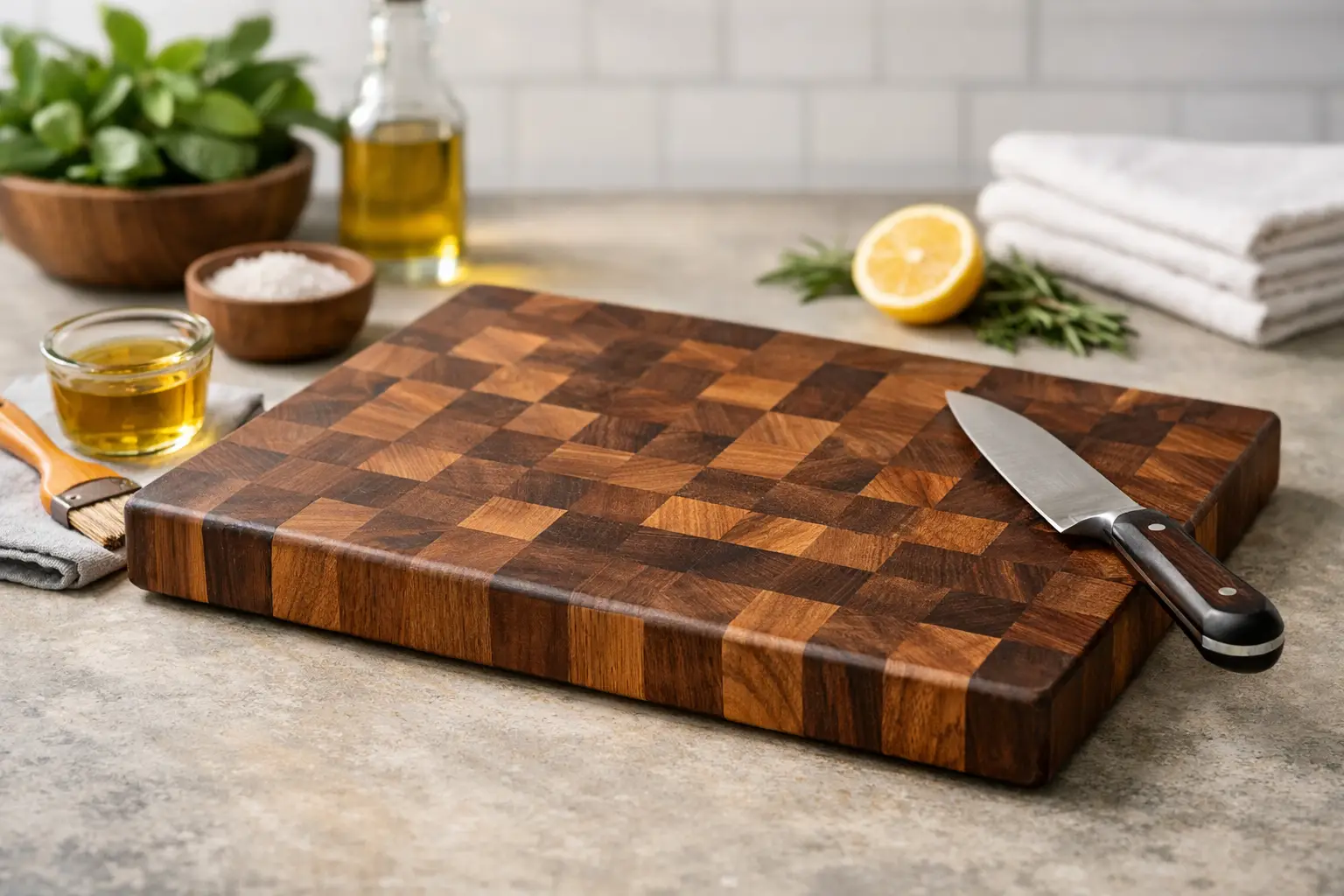
Begin with a clean, completely dry board. Apply a generous amount of food-safe mineral oil with a lint-free cloth or clean paper towel, working it into the end grain, edges, handles, and any feet or recessed areas. Let the oil sit for several hours or overnight so the wood can absorb what it needs.
The next day, wipe away any excess. If the board still looks dry, repeat the process. There is no benefit to leaving a greasy film on the surface. The goal is nourished wood, not a slick finish.
After oiling, a thin layer of beeswax-based board conditioner can be buffed across the surface. Let it rest briefly, then polish away the excess with a soft cloth. This step is especially welcome on a board that sees frequent use, because it adds a measure of water resistance and a refined finish.
Avoid vegetable oil, olive oil, canola oil, and other cooking oils. They can oxidize over time and develop an unpleasant odor or sticky surface. Use products made specifically for food-contact wood.
Remove Odors and Stains Without Overcorrecting
A well-used board will show evidence of meals made on it. Fine knife marks, subtle color variation, and a deepened tone are part of its story. Not every mark needs correction.
For lingering garlic, onion, or spice odors, wash the board first and let it dry in open air. If needed, sprinkle coarse salt over the surface and rub it gently with half a lemon, then rinse, towel dry, and allow the board to air-dry upright. Use this occasionally, not as a daily treatment. Acid and abrasion can dull the finish if overused.
For a more persistent stain, make a light paste of baking soda and water, rub it gently into the affected area, then wash and dry the board. Follow with mineral oil once the wood is fully dry. Strong scrubbing, bleach-heavy cleaners, and scouring pads can create a pale, uneven patch that calls for more repair than the original stain did.
Store It Where It Can Breathe
A substantial end-grain board deserves a stable home. Store it flat in a dry cabinet with room around it, or stand it upright where both sides can receive airflow. If displayed on the counter, keep it clear of the sink, dishwasher steam, and direct heat.
In very dry winter conditions, oiling may be needed more often. In humid climates, thorough drying becomes even more valuable. The right routine is not identical in every home. Pay attention to how your individual board responds, then adjust.
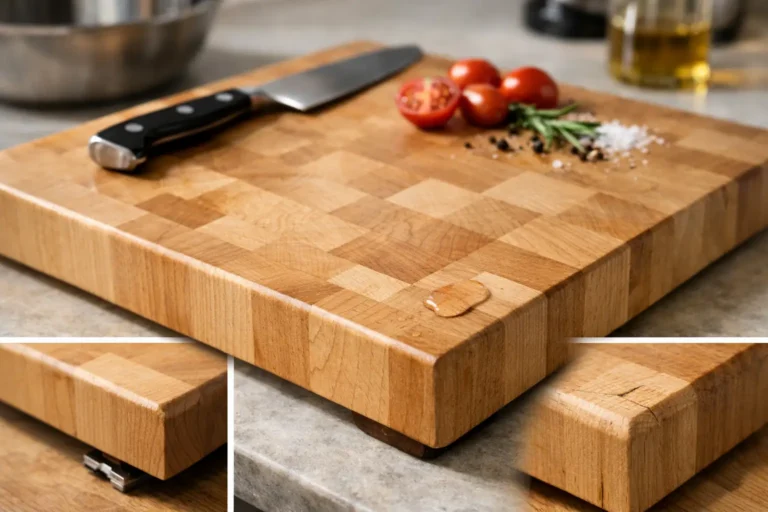
If your board has rubber feet, check them occasionally and keep the underside clean. A board that rests securely on the counter is safer to use and less likely to trap moisture beneath it.
When a Board Needs More Than Routine Care
Small knife marks are normal. Deep grooves, raised grain, minor roughness, or a stubborn stain can often be improved with careful refinishing. Light sanding with fine-grit sandpaper, always following the direction of the wood where possible, can refresh a localized area. Clean away dust, let the board dry, then re-oil and condition it thoroughly.
For cracks, loose feet, separated joints, or significant warping, stop using the board until you understand the cause. A handcrafted board is worth treating thoughtfully. In some cases, a skilled woodworker can make a repair that extends its useful life while preserving its character.
Bluwood boards are built in Arkansas from carefully selected domestic hardwoods, then finished with a food-safe blend of oil and beeswax. That finish is not meant to seal the wood away from life. It is meant to support a board made to be used, cared for, and shaped by years at the table.
Give your board a quick wash after use, let it dry in the open, and oil it when the wood asks for it. Those small acts of attention turn a useful kitchen tool into something more personal with every meal.