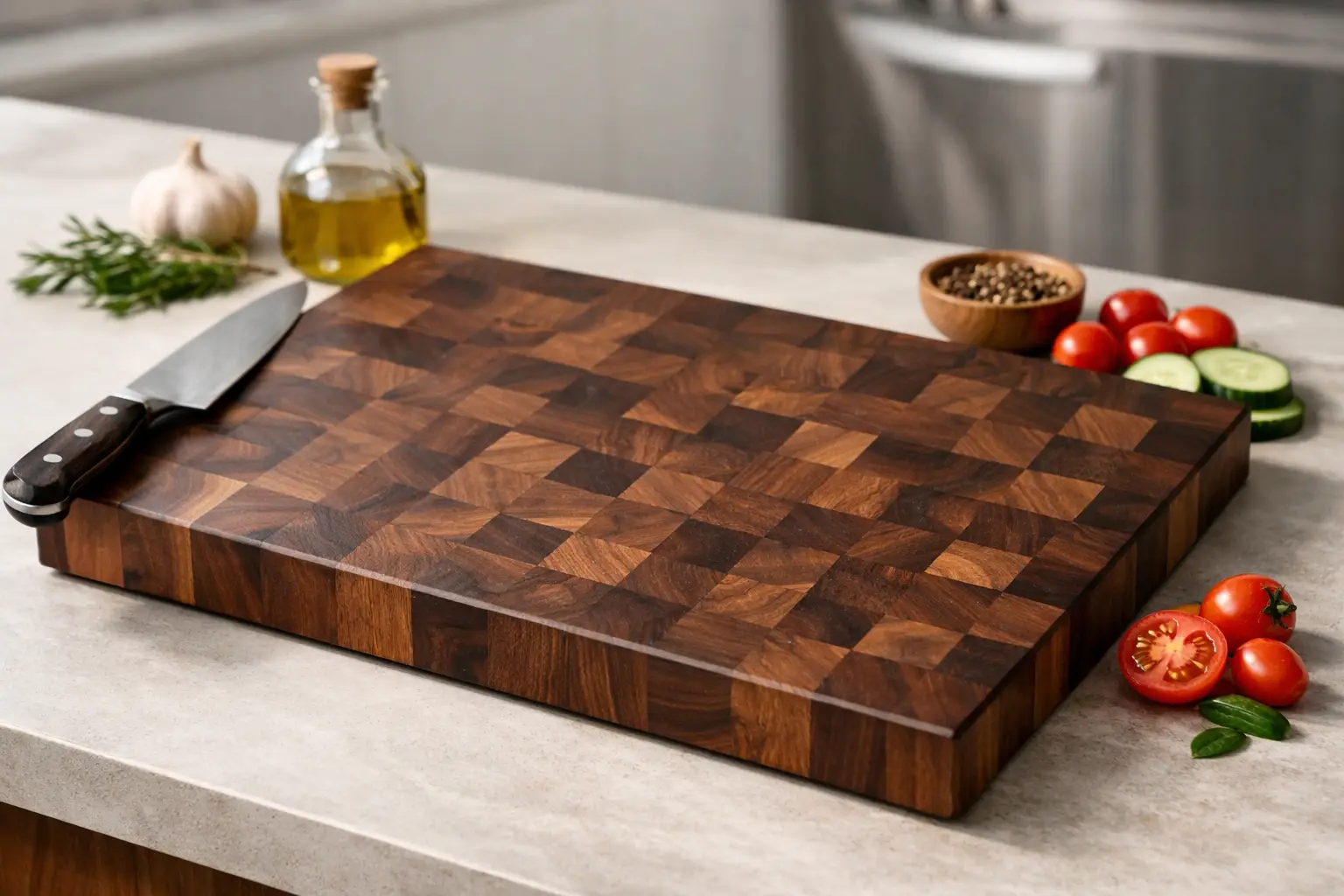
Why Choose an End Grain Walnut Cutting Board
A fine cutting board earns its place slowly. It meets the morning knife, carries the work of a weeknight meal, and gathers the marks of dinners worth repeating. An end grain walnut cutting board is made for that kind of life: substantial under hand, gentle on quality knives, and warm enough to leave on the counter when the kitchen is quiet.
Walnut has a presence that manufactured kitchen goods cannot imitate. Its color moves from deep chocolate to lighter brown, often with graceful mineral streaks and shifting grain. When that material is arranged in end-grain construction, it becomes more than a handsome surface. It becomes a hardworking piece of American hardwood built to be used, cared for, and kept close.
What Makes End-Grain Construction Different
A cutting board can be made in several ways, but the orientation of the wood matters. On a face-grain or edge-grain board, a knife cuts across or along the length of the wood fibers. On an end-grain board, the cut ends of those fibers face upward, much like the surface of a wood block.
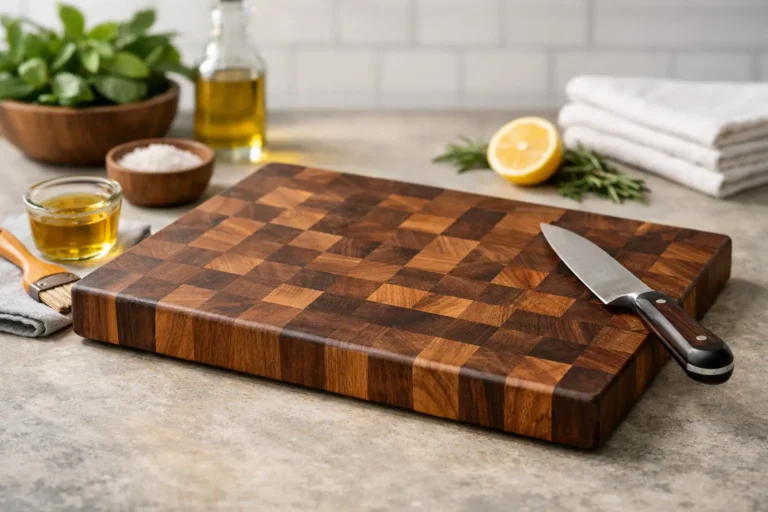
That orientation gives the board its distinctive checkerboard-like pattern and its practical advantage. Instead of forcing a knife edge to slice straight across long fibers, the fibers can part slightly under the blade and close back around it. The result is a cutting surface that is generally kinder to sharp knives and better suited to regular, serious prep work.
End grain also asks more of the maker. Individual hardwood blocks must be precisely milled, arranged for both strength and visual balance, bonded, flattened, sanded, and finished with care. Done well, the board feels solid and composed rather than merely thick. Its weight keeps it steady while chopping, and its construction gives everyday work a welcome sense of permanence.
Why Walnut Belongs in the Kitchen
Black walnut is valued for its depth of color, but its appeal is not only visual. It is a domestic hardwood with a fine, even texture and a natural warmth that works comfortably in kitchens ranging from traditional to spare and modern. A walnut board does not need decoration to feel considered.
Each piece of walnut carries its own character. One board may show quiet, uniform brown; another may reveal flowing shifts of color, small knots, or darker lines formed over decades of growth. Those variations are not flaws to erase. They are part of what makes a handcrafted board personal.
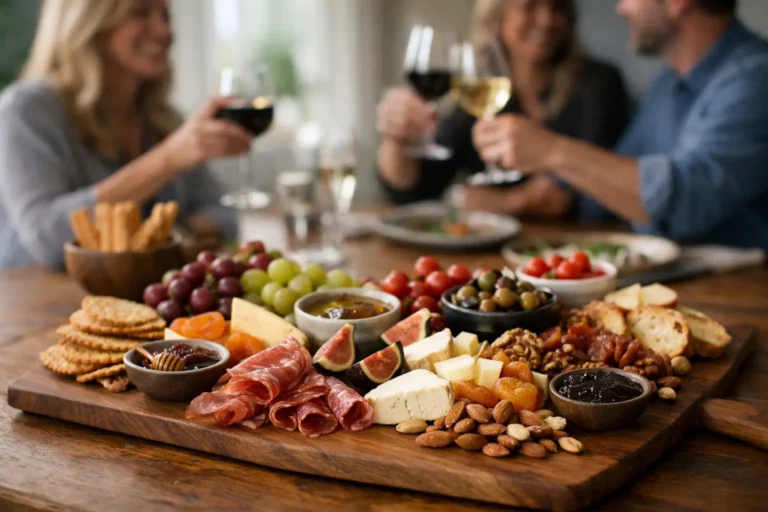
Walnut is also a thoughtful choice for people who want a board that can move between preparation and presentation. It looks at home beneath a loaf of bread, a roasted chicken, or a simple arrangement of cheese and fruit. There is no need to hide it in a cabinet once the cooking is done.
That said, walnut is not the only excellent wood for an end-grain board. Hard maple offers a lighter, more classic look. White oak brings a clean, architectural grain. The right choice depends on the kitchen, the recipient, and the feeling you want the piece to carry. Walnut is the choice for richness, contrast, and a surface that grows more inviting with age.
An End Grain Walnut Cutting Board for Daily Use
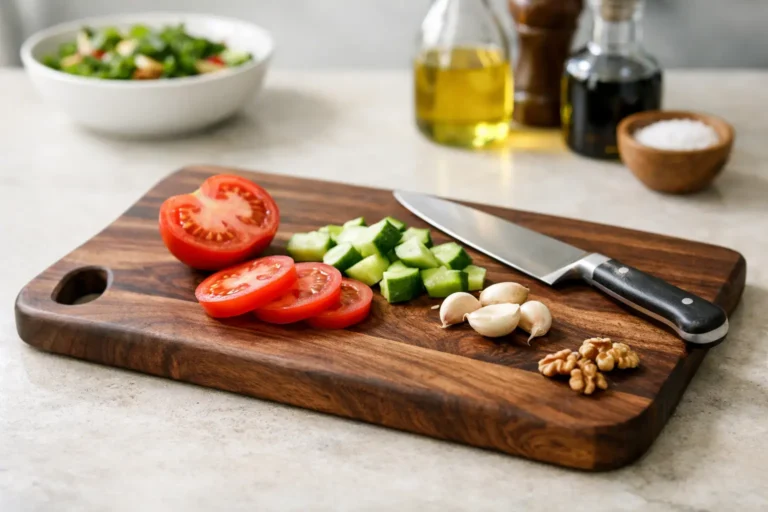
A premium board should not become a precious object that never meets a knife. The best reason to choose end grain is that it is built for the work: slicing herbs, breaking down vegetables, carving a roast, and preparing meals for people you love.
Size matters here. A smaller board can be easy to reach for when cutting citrus or making a quick sandwich, while a substantial board gives you room to prep without crowding ingredients over the edge. Larger boards are especially useful for home cooks who make full meals from scratch, entertain often, or want one dependable surface at the center of the kitchen.
Thickness matters as well. A generously built board feels stable and reassuring on the counter. It also creates the visual weight that makes walnut so compelling on display. The trade-off is simple: a larger end-grain board is heavier. For many owners, that is part of the appeal, but it is worth choosing a size you can comfortably lift to clean and oil.
At Bluwood Products, boards are precision-milled, assembled by hand, and individually finished and inspected in Arkansas. Carefully selected domestic hardwood and a food-safe oil-and-beeswax finish allow the natural character of walnut to remain at the center of the piece.
The Details That Separate a Fine Board From an Ordinary One
Not every thick wooden board is made to the same standard. Material quality, joinery, finish, and attention to the final surface all shape how a board performs over time.
Look first at the hardwood itself. A quality end-grain board begins with properly selected, properly dried wood. Wood continues to respond to its environment, so careful material preparation helps the finished board remain stable through changing seasons and normal kitchen humidity.
Then consider the assembly. Clean, tight glue lines and accurately aligned blocks are signs of disciplined work. The pattern should feel intentional, whether it is a traditional walnut field or a more intricate arrangement incorporating maple or white oak. Good construction is not only about appearance. It helps the board withstand years of cutting, cleaning, and handling.
The finish should protect without masking the wood. Food-safe oil penetrates and nourishes the fibers, while beeswax leaves a soft protective barrier and a pleasing hand feel. This type of finish is meant to be renewed, not treated as a permanent coating. That is a virtue. A cared-for board can be refreshed as it changes with use.
Care That Becomes Part of the Ritual
Wood asks for a little attention, then gives back for years. After use, wash the board by hand with mild soap and warm water. Rinse it, dry it thoroughly, and stand it on edge or allow air to circulate around both sides. Never soak it in the sink, and never place it in the dishwasher. Heat, prolonged water exposure, and harsh detergent are hard on any hardwood board.
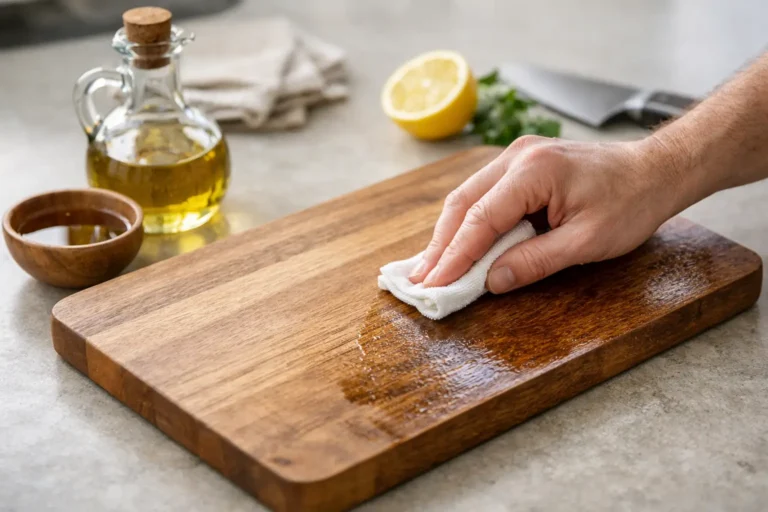
When the surface begins to look dry or feels less smooth, apply a food-safe board oil. Let it absorb, then follow with a beeswax conditioner if desired. How often you do this depends on how frequently the board is used and how dry the home is. A busy board may appreciate monthly care; a board used less often may need attention only a few times a year.
Use both sides when the design allows. This helps the board age evenly and gives it a more balanced life. Expect light knife marks over time. They are evidence of use, not a failure of craftsmanship. With regular oiling, the walnut will deepen, the surface will develop its own quiet patina, and the board will become more recognizably yours.
A Useful Gift With Lasting Weight
An end-grain walnut cutting board makes sense for more than a personal kitchen purchase. It is a gift with a clear purpose and a long life, which is rare. For a wedding, anniversary, housewarming, closing, or corporate milestone, it offers a daily reminder rather than a momentary gesture.
Personalization can make that reminder more specific. A family name, date, monogram, or meaningful inscription turns a useful object into a record of an occasion. For business and real estate gifting, a refined board communicates care without feeling impersonal or disposable. Presentation-ready packaging and authenticity documentation add to that sense that the gift was chosen, not simply ordered.
A numbered limited edition or a more customized reserve piece can suit collectors and landmark occasions. An everyday signature board may be the better answer for someone who values beautiful tools and intends to use one constantly. Neither choice is lesser. It depends on whether the board is meant to mark a moment, anchor a kitchen, or do both.
Choose a board you will not hesitate to bring into the work of the day. Let it hold the chopped onions, the birthday cake, the first meal in a new home. With use and simple care, walnut becomes warmer, more familiar, and more personal – exactly as a well-made household object should.