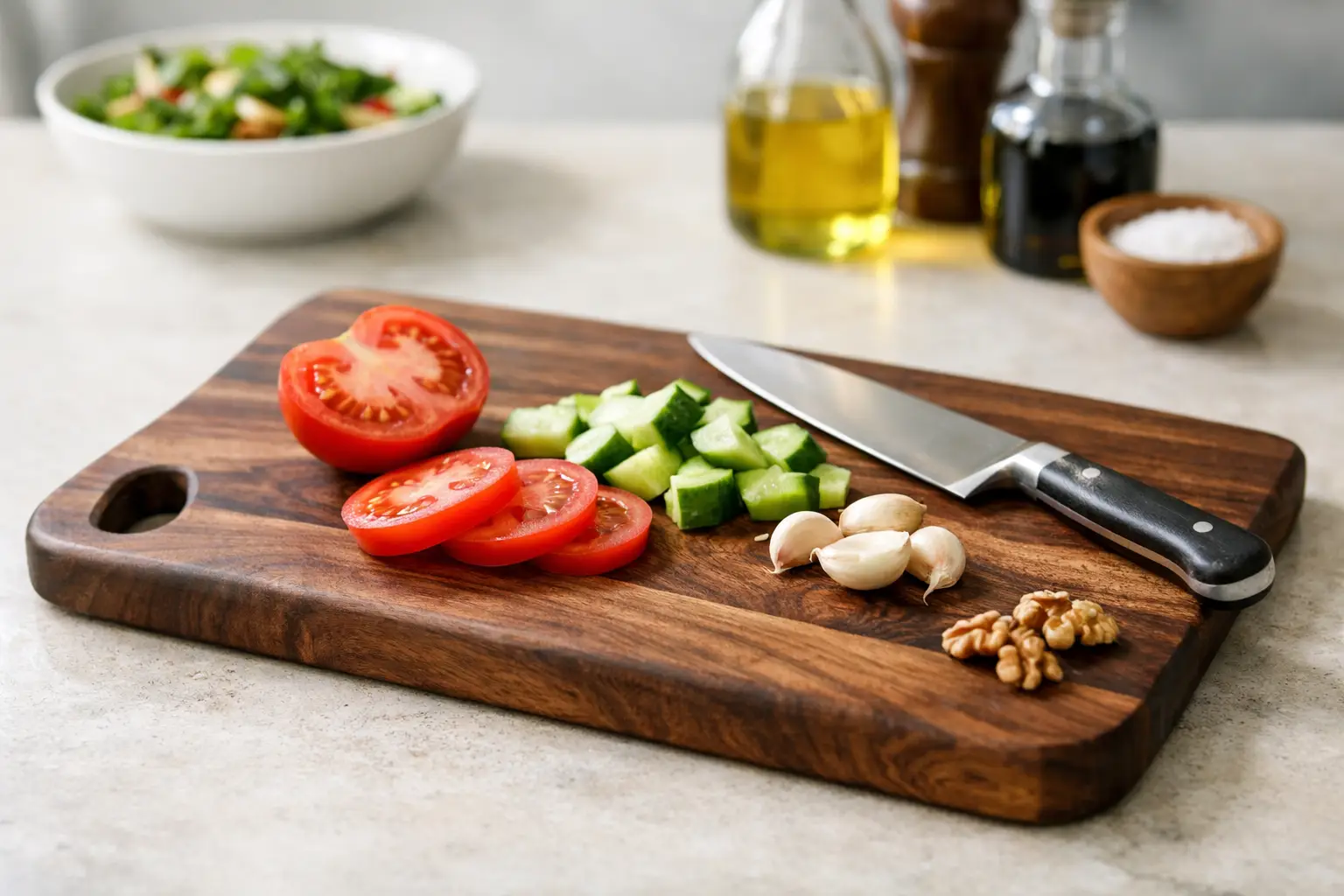
Are Walnut Cutting Boards Food Safe for Daily Use?
A well-made walnut board belongs in the work of the kitchen, not behind glass. The question, are walnut cutting boards food safe, has a reassuring answer: yes, when the board is made from suitable hardwood, finished properly, and cared for as the natural material it is.
Black walnut brings deep brown color, expressive grain, and a sense of permanence to a countertop. It is also a practical choice. Its density gives it the strength to stand up to regular chopping, while its surface remains more forgiving to knife edges than glass, stone, or metal. A walnut board is not a disposable kitchen accessory. With thoughtful use and simple maintenance, it can serve beautifully for years and gather the marks that make it yours.
Are Walnut Cutting Boards Food Safe?
Walnut, including American black walnut, is widely used for food-contact items such as cutting boards, serving boards, bowls, and utensils. The wood itself is appropriate for kitchen use. What matters most is how the board is built, finished, cleaned, and maintained over time.
A quality walnut board should be made from sound, carefully selected hardwood without loose defects or deep, open cracks. It should be sanded smooth and finished with a treatment intended for food-contact surfaces. At Bluwood, boards are finished with a food-safe blend of oil and beeswax that nourishes the wood while leaving a natural, useful surface for daily preparation and presentation.
Food safe does not mean maintenance-free. Wood moves subtly with changes in humidity, and its finish gradually wears through ordinary use. That is not a flaw. It is simply part of owning a natural, handcrafted object. A board that receives occasional oiling and sensible care remains a clean, dependable surface for preparing meals.
The finish matters as much as the wood
Not every finish belongs on a cutting board. Decorative furniture stains, unknown sealers, and finishes that can chip or flake are poor choices for a surface that will meet a knife and fresh food every day. A proper cutting board finish is designed to soak into and protect the wood rather than create a brittle plastic-like film on top.
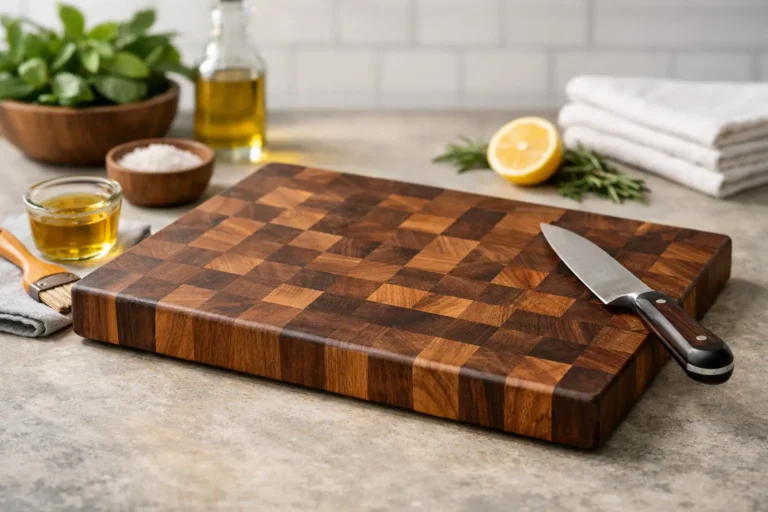
Food-grade mineral oil is a common foundation because it is stable and does not turn rancid. Beeswax is often added to give the surface a soft sheen and help repel moisture. Together, they make a practical finish that can be renewed at home as the board begins to look dry or pale.
A fully cured finish specifically labeled for food-contact use can also be appropriate, but it should be chosen with care. For a board meant to be cut on regularly, an oil-and-wax finish offers a straightforward advantage: it is easy to refresh without stripping or refinishing the entire piece.
Why Walnut Performs Well in a Working Kitchen
Walnut offers a balanced combination of beauty and utility. It is hard enough to make a lasting board, yet not so hard that it is unnecessarily punishing to a good kitchen knife. Its naturally rich color also develops character gracefully. Small signs of use tend to blend into the visual depth of the grain rather than announce themselves on a pale surface.
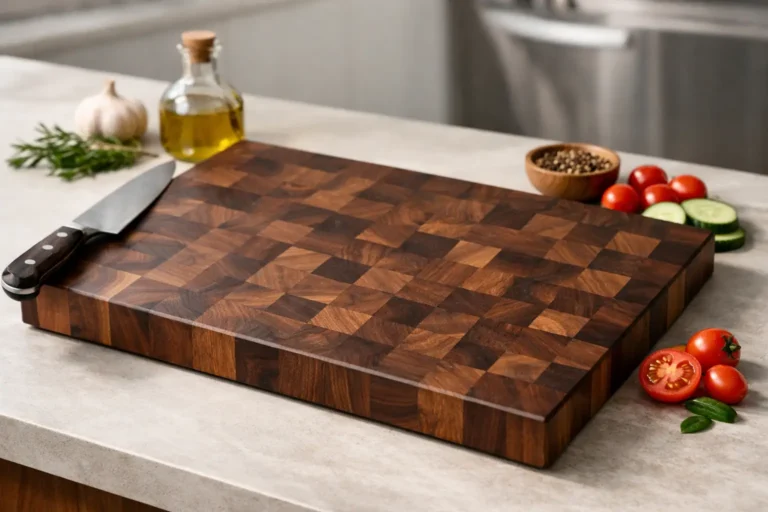
Construction plays an equally meaningful role. A substantial end-grain board presents the exposed ends of wood fibers at the cutting surface. Rather than forcing a blade across long fibers, the knife can pass gently between them. This helps make end-grain boards notably kind to knife edges and gives the surface a durable, hardworking quality.
End-grain construction also gives a board visual dimension. Each block reveals its own pattern, and hand assembly turns individual pieces of domestic hardwood into a cohesive surface with real presence. It is one reason an end-grain walnut board can feel at home beside a range during dinner preparation and at the center of a table when guests arrive.
Still, walnut is not invincible. It can dent if dropped, dry out if neglected, or crack if left soaking in water. Premium materials deserve use, but they also reward a little attention.
What Food Safety Looks Like in Daily Use
A clean, well-maintained walnut board is suitable for chopping vegetables, slicing bread, carving cooked meats, and preparing everyday meals. For raw poultry, seafood, or meat, the same common-sense food-safety practices apply as they do with any cutting surface: wash promptly and thoroughly after use, avoid cross-contamination, and sanitize when the task calls for it.
Wash the board by hand with warm water, mild dish soap, and a soft sponge or cloth. Rinse it well, then dry it immediately with a towel and allow it to finish drying upright or on edge, where air can reach both sides. This simple habit helps prevent excess moisture from lingering in the wood.
Never put a walnut cutting board in the dishwasher. The combination of prolonged water exposure, high heat, and aggressive detergent can strip its finish, warp the wood, and stress the glue joints. Likewise, do not leave it submerged in a sink or resting in a pool of water. A cutting board is built for the kitchen counter, not for soaking.
For lingering odors after cutting onions, garlic, or fish, wash the board as usual and let it dry completely. A paste of coarse salt and a little lemon can be used occasionally as a gentle refresh, followed by a light rinse and thorough drying. Use restraint with acidic ingredients and abrasives. The goal is to clean the wood, not scour away its protective finish.
Know when to oil your board
Wood will tell you when it needs care. If the surface looks dull, feels dry, or absorbs water quickly rather than allowing it to bead briefly on top, it is time for a fresh application of food-safe board oil or oil-and-wax conditioner.
Apply a modest amount to a clean, dry board and spread it evenly across the top, bottom, edges, and any handles or handholds. Let it absorb according to the product directions, then buff away excess. Treating all sides matters because it helps the board take in moisture evenly.
How often you oil depends on climate, use, and washing habits. A board used daily may benefit from monthly attention, while a lightly used serving board may need it only a few times a year. Let the condition of the wood guide you rather than following a rigid calendar.
Walnut, Allergies, and Other Sensible Questions
Black walnut wood should not be confused with walnut food proteins. The concern associated with tree-nut allergies is generally the nut itself, not a finished wooden cutting board. Still, households managing severe allergies should make decisions with their own medical guidance in mind, especially if a board has previously been used to prepare walnut-containing foods.
Some people also ask about the naturally occurring compounds in walnut wood, including juglone. These compounds are part of the living tree’s chemistry and are often discussed in gardening contexts. They do not make a properly made and finished walnut cutting board unsuitable for ordinary food preparation.
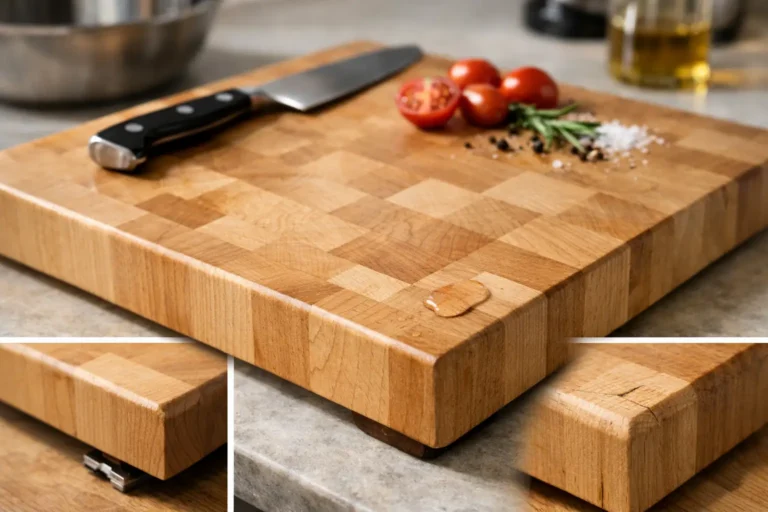
The more practical concern is condition. Any board, regardless of species, should be retired or professionally repaired if it develops deep splits, loose pieces, failing joints, or damage that cannot be cleaned effectively. Surface knife marks are expected and normal. Open cracks that trap food residue are different.
Choosing a Walnut Board Worth Caring For
A food-safe walnut cutting board begins with materials and workmanship that respect the purpose of the piece. Look for domestic hardwood selected for soundness, careful milling, strong joinery, a smooth hand-finished surface, and a clearly identified food-safe finish. Weight and thickness matter, too. A substantial board stays put during preparation and feels reassuringly capable beneath the knife.
For an everyday board, choose a size that earns its place near the stove. For a wedding, anniversary, closing gift, or milestone worth marking, a personalized walnut board adds usefulness to the gesture. The best pieces do both. They arrive presentation-ready, look worthy of display, and remain ready for onions, herbs, bread, and the next meal shared at home.
Use a walnut board with confidence. Wash it promptly, dry it well, feed it when it looks thirsty, and let its surface record the good work of your kitchen. Beautiful enough to display. Built well enough to use.