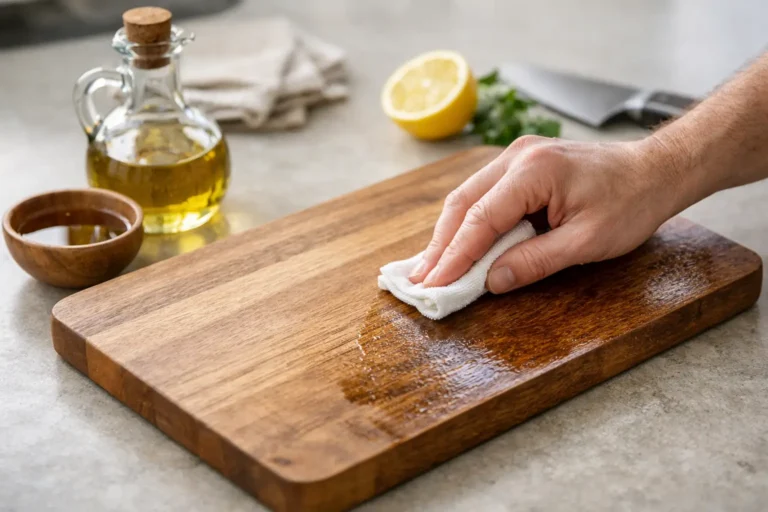
How to Care for a Walnut Cutting Board
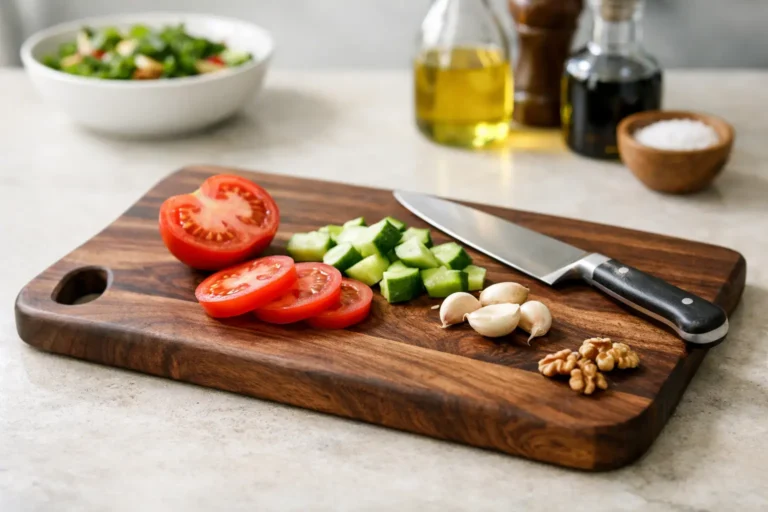
An American black walnut cutting board brings warmth, rich color, and natural character to the kitchen. With a simple care routine, it can stay smooth, stable, and beautiful through years of daily meals. The essentials are straightforward: wash gently, dry promptly, condition when needed, and avoid prolonged exposure to water or heat.
Wash your walnut board by hand
After use, remove food debris and wash both sides with warm water, mild dish soap, and a soft sponge or cloth. Cleaning both faces helps the board absorb moisture more evenly. Rinse it promptly rather than leaving it in a full sink.
Never place a solid-wood cutting board in the dishwasher. High heat, harsh detergent, and a long wet cycle can dry the fibers unevenly and may cause warping, checking, or joint failure.
Dry it promptly and evenly
Wipe away surface water with a clean towel, then stand the board on an edge or place it where air can circulate around both sides. Avoid leaving a damp board flat on a countertop. Do not place it beside a hot burner, inside an oven, or directly over a heating vent to speed drying.
Condition with food-safe board oil
When the wood looks pale, feels dry, or absorbs water quickly, apply a food-safe mineral oil or a conditioner made specifically for wooden cutting boards. Spread a thin, even coat over the face, back, and edges. Allow it to soak in according to the product directions, then wipe away excess with a clean cloth.
New boards may benefit from more frequent conditioning during their first months. After that, let the wood tell you what it needs. Climate, humidity, and washing frequency all affect the schedule.
Remove odors without damaging the wood
For lingering food odors, wash the board normally and allow it to dry completely. A light application of coarse salt with a cut lemon can help freshen the surface, but do not leave acidic juice sitting on the wood. Rinse and dry immediately afterward.
Avoid these common cutting board mistakes
- Do not soak a walnut cutting board in water.
- Do not run it through a dishwasher.
- Do not use cooking oils such as olive or vegetable oil as a conditioner; they can become rancid.
- Do not use the same unwashed surface for raw proteins and ready-to-eat food.
- Do not let moisture remain trapped beneath the board.
When should a wooden board be refinished?
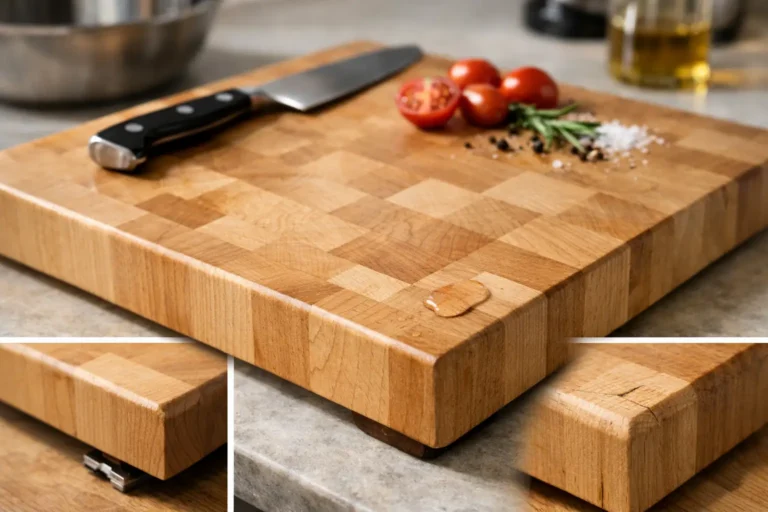
Light knife marks are normal and become part of a well-used board. If the surface becomes rough or heavily marked, careful sanding and refinishing can restore it. Deep cracks, loose joints, or areas that cannot be cleaned thoroughly should be evaluated before continued food use.
Built to be used, cared for, and passed down
Bluwood Products handcrafts premium walnut, hard maple, and white oak cutting boards in Arkansas. Good care protects the craftsmanship and helps an everyday kitchen tool develop heirloom character.
Read our complete shipping, board care, and returns guide, compare options in the cutting board guide, or shop handcrafted cutting boards.