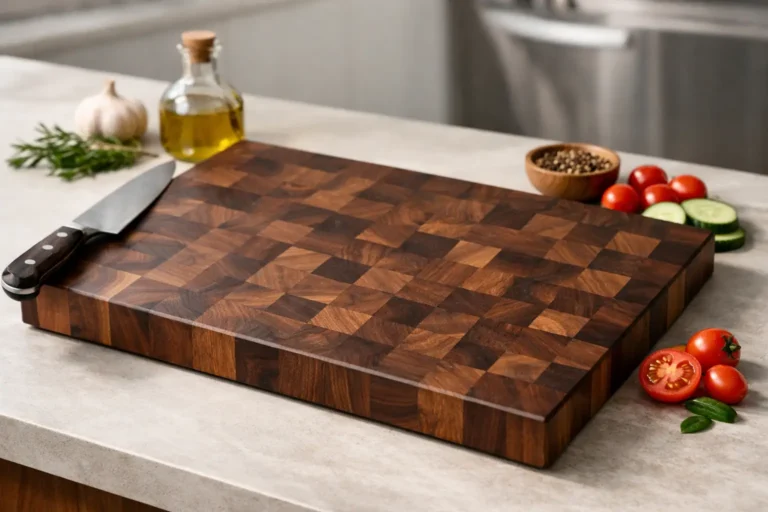
End-Grain vs. Edge-Grain Cutting Boards: Which Is Right for You?
Choosing a handcrafted cutting board is about more than size and color. The way the wood is arranged affects durability, appearance, knife feel, maintenance, and price. Two of the most common constructions are end-grain and edge-grain. Understanding the difference makes it easier to choose a board that fits the way you cook and the way you want your kitchen to look.
What is an end-grain cutting board?
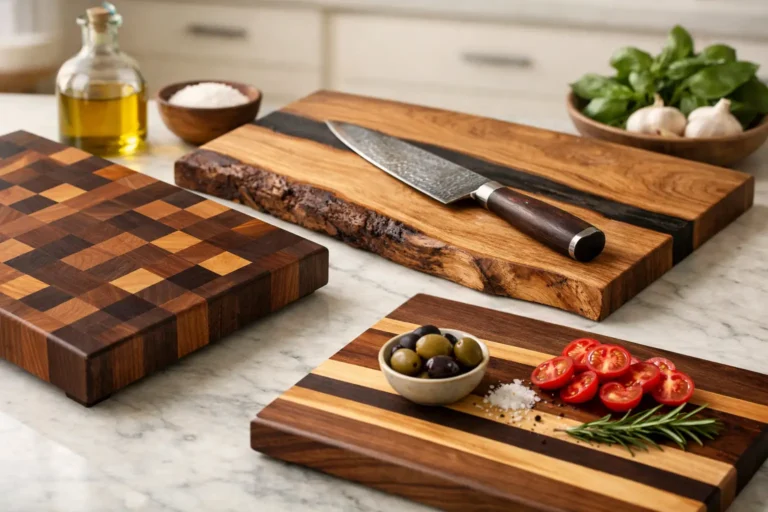
An end-grain board is made with the ends of the wood fibers facing upward. This creates the distinctive checkerboard or mosaic appearance associated with premium butcher blocks. When a knife meets the surface, the fibers can separate slightly and close again instead of being cut across repeatedly.
That structure gives end-grain boards a forgiving feel under the knife and helps fine cut marks blend into the pattern. They are an excellent choice for frequent chopping, serious home cooks, and anyone looking for an heirloom-quality centerpiece. Explore our Reserve Collection for statement boards made for demanding kitchen work.
What is an edge-grain cutting board?
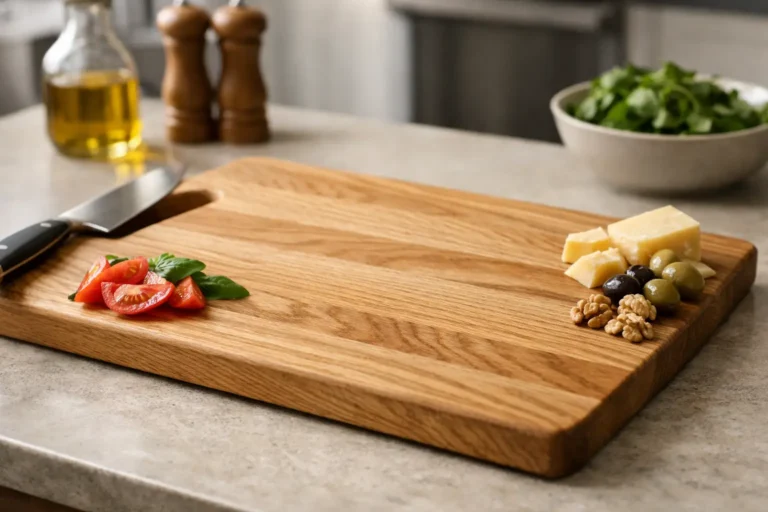
Edge-grain boards are built with the long edge of each wood strip facing upward. Their clean linear grain highlights the natural character of walnut, maple, or white oak. They are generally lighter, slimmer, and more affordable than comparable end-grain boards while remaining strong enough for everyday preparation and serving.
An edge-grain board is a versatile choice when you want a beautiful work surface that is easy to lift, store, or display. Our Signature Collection offers handcrafted boards with a refined profile for daily use and entertaining.
End-grain versus edge-grain: the practical differences
- Knife feel: End grain is typically softer and more forgiving under a blade.
- Appearance: End grain creates a patterned surface; edge grain emphasizes long, flowing grain lines.
- Weight: End-grain boards are usually thicker and heavier, helping them stay planted during chopping.
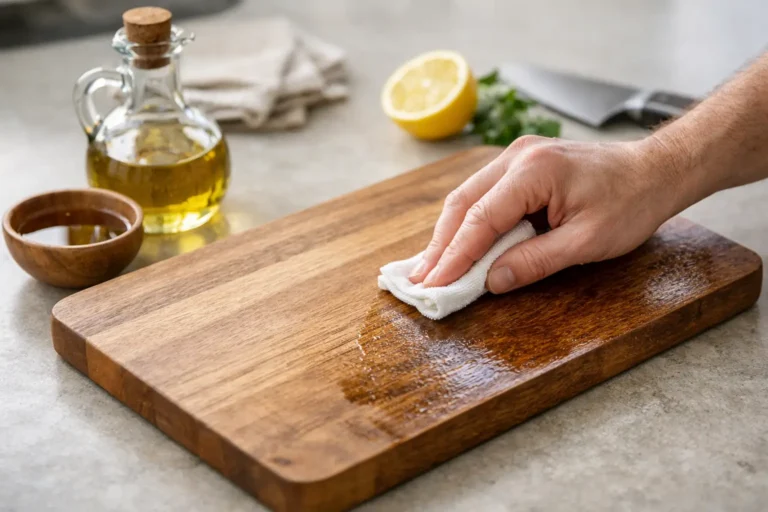
- Maintenance: Both constructions should be washed by hand, dried promptly, and conditioned with food-safe board oil.
- Price: End grain requires more material and labor, while edge grain often offers excellent value for everyday use.
Which cutting board should you choose?
Choose end grain if you want a substantial work surface, chop often, value a knife-friendly feel, or want a board with heirloom presence. Choose edge grain if you prefer a lighter multipurpose board, appreciate linear wood grain, or want handcrafted quality at a more accessible price.
Wood species matters too. American black walnut delivers rich chocolate tones, hard maple provides a bright and timeless surface, and white oak brings visible grain and warm natural character. Our cutting board guide can help you compare construction, wood, and size.
A handcrafted board made in Arkansas
Bluwood Products builds premium cutting boards in Arkansas with attention to grain selection, proportion, finish, and long-term usefulness. Whether you choose end grain or edge grain, proper care will help the board become a lasting part of family meals and celebrations.
Shop handcrafted cutting boards, or learn about personalized boards and gift options for weddings, anniversaries, realtor closings, builder gifts, and corporate occasions.